
Why Is Divorce So Stressful? (Episode 2)
The science of why "I got divorced" is really a basket of overlapping stressors — and why even functional people can't have a five‑minute conversation with their ex.
Divorce is so stressful because the word "divorce" isn't one event. It's a basket of simultaneous losses and adjustments: the end of a marriage, a changed relationship with your kids, a new financial reality, a new schedule, and the loss of who you thought your future would be. On top of that, the conflict with your ex pushes your brain into what therapist Jon Peters calls "code red" — a survival state evolved to outrun bears, not negotiate a Sunday drop‑off. In this 17‑minute episode, Jon explains why divorce ranks among the top three most stressful life events ever measured, why two perfectly functional adults can't manage even simple decisions together, and why getting a handle on your stress is the foundation of everything else: coping, coparenting, and parenting your kids well.
Listen to Episode 2

Key takeaways from this episode
Divorce ranks in the top three most stressful life events ever measured — alongside the death of a spouse and a major felony conviction. Divorce with children may be the most stressful of all.
"Divorce" isn't one stressor — it's a basket of them. Loss of partner, changed parenting schedule, financial shifts, new work patterns, identity loss. You're not stressed about "the divorce" — you're stressed about a dozen things piled on top of each other.
Step one is naming what you're actually stressed about. Most dads can't manage what they haven't named.
The "code red" brain is the central problem. When stress crosses from orange into red, your brain literally changes — it's wired for fight or flight, not negotiation. This is why you and your ex can blow up over a 30‑second logistics question.
Code‑red brain blinds you to positives, narrows your view, and amplifies negatives. It's evolution doing its job — just not the job you need right now.
The goal isn't zero stress. You'll still get to yellow and orange. The goal is to stop crossing into red, where your "rational, wise, empowered brain" goes offline.
The basics actually work: sleep, exercise, lower alcohol, lower caffeine, social support. Future episodes will go deep on each.
The "code red" framework — how stress hijacks your brain
Jon's stress model uses four levels:
Code green — calm, fully functional
Code yellow — mild stress, still fully capable
Code orange — high stress, still mostly capable
Code red — survival mode, brain physically changes, judgment narrows, hostility spikes
The reason two functional adults can fight about Sunday pickup but negotiate a six‑figure deal at work the same day: with your ex, you hit code red within milliseconds. With anyone else, you don't. The work isn't fixing your ex — it's keeping your own brain out of code red so you can function the way you already know how to.
About the host
Jon Peters, MSW, LCSW, LICSW, has spent 30 years working with separated parents as a therapist, coparent coach, mediator, and expert witness in divorce hearings. He's delivered live "Cope with Divorce" workshops to roughly 10,000 parents — including teaching the state‑mandated divorce course in Indiana for many years. He's the author of two books for separated parents: The Coparenting Manifesto and The Quick Guide to Divorce Mediation. And he's a divorced dad himself.
Topics covered (with timestamps)
0:00 — Why we're talking about stress (and why it'll help, not hurt)
1:15 — Jon's background: 40+ years studying and teaching stress management
2:54 — Why "I got divorced" is really a basket of stressors, not one event
4:22 — The list: partner loss, schedule change, financial shifts, identity change
5:30 — Step one: name what you're actually stressed about
6:21 — Why even high‑functioning people melt down with their ex over simple decisions
8:33 — The science of "code red" brain — and the bear analogy
10:03 — Why code‑red brain is wired against good parenting and coparenting
11:00 — The real goal: stay out of red, not avoid yellow and orange
11:54 — The honest answer to "but what if my ex is the problem?"
13:17 — The basics that reliably lower stress: sleep, exercise, alcohol, caffeine, social support
Full transcript
A note on the audio: in this early episode, Jon refers to the show as "Fatherhood Forward" — that was an early working title. The show is now and always Being Dad after Divorce.
Related episodes
Episode 1 — Welcome to the Being Dad after Divorce Podcast — meet Jon and the framework
Episode 4 — Easy Technique to Lower Divorce Stress — the first practical tool, in under 2 minutes
Episode 5 — This Is Your Brain on Divorce, Part 1 — the deeper neuroscience behind "code red"
Want help getting out of code red?
If you're recognizing yourself in this episode — the can't‑sleep, can't‑think‑straight, can't‑talk‑to‑your‑ex spiral — that's exactly what 1:1 coaching is built to interrupt. The first 30 minutes is free, with no pitch, just a real conversation about where you are.
Click the chat on the right side of the screen to book an appointment
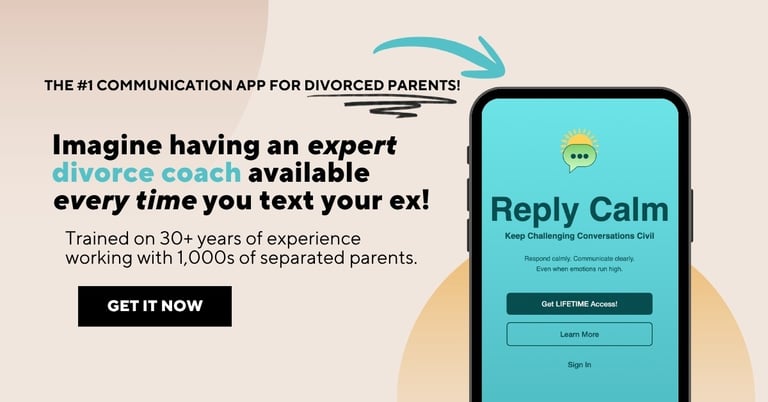
Get the app!

Owned and operated by Bamboo Grove Workshop